
 Free Delivery & Return
 365-Day Returns
 10 Million Happy Customers
 500,000 Products in Stock

Wobble Stools: How They Work and Whether They Fit Your Day
Reviewed by the Beliani Content Team · Updated November 2026
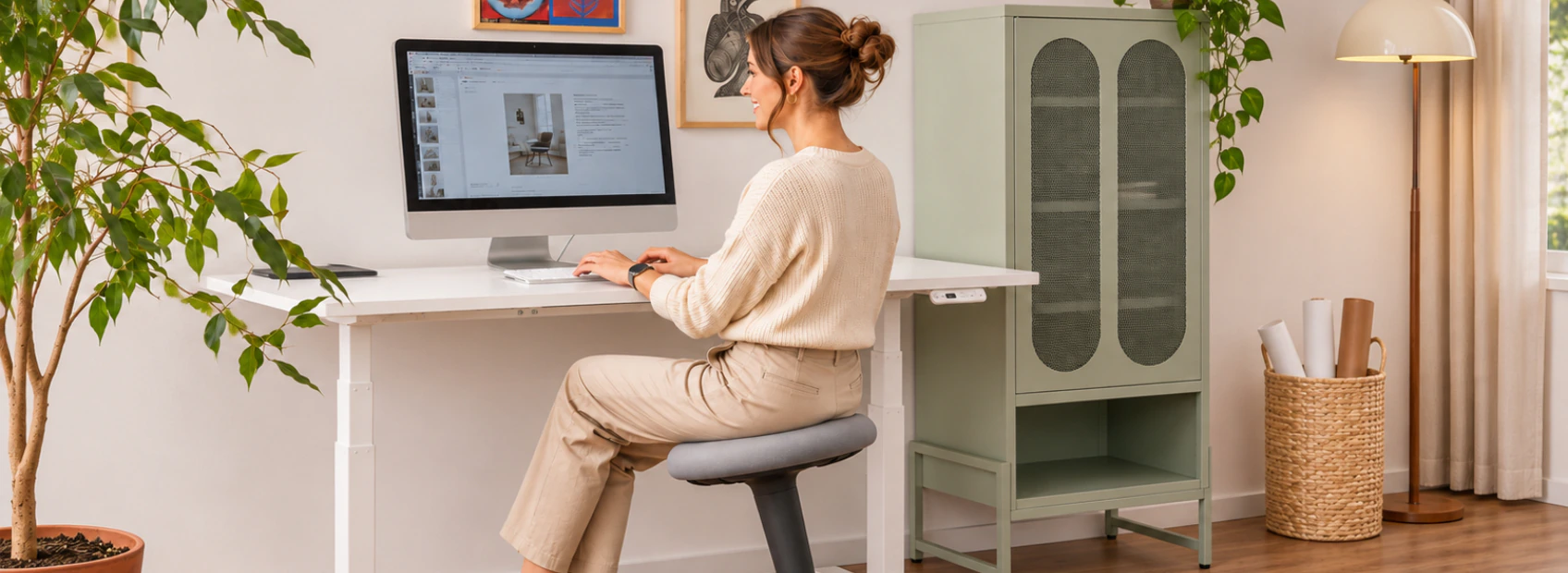
A wobble stool swaps a flat, fixed seat for a rounded, weighted base that tilts and rocks in every direction, so sitting still is no longer really an option. For anyone who spends long stretches at a desk, a kitchen island or a classroom table, that constant small movement changes how a seat feels over the hours. It will not turn a long day of sitting into a workout or fix a back problem, but it does give you a more active alternative to a fixed seat for part of the day.
In short
Will a wobble stool improve how you sit?
It may change how you sit, but the effect is modest and the research on active seating is limited and mixed. The rounded, weighted base lets the seat tip a few centimetres in any direction, so your body makes small adjustments to stay balanced instead of settling into one fixed position. That can keep you moving a little more through a task, though it will not correct an existing back problem or replace medical advice. A wobble stool works best as an active alternative for part of the day, alongside a supportive chair for long, uninterrupted desk work, rather than as your only seat from morning to evening.
What does a wobble stool promise, and where does it fit?
Active sitting means keeping your body subtly engaged instead of letting it go completely passive, the same idea behind standing desks and using a gym ball as a chair. A wobble stool aims to do this through the base alone, with no deliberate exercises or routines required.
Typical specifications give a sense of what to expect from most wobble stools on the market:
- Seat height range: 45–60 cm
- Seat diameter: 34–36 cm
- Base type: rounded, weighted
- Typical max load: up to 110–120 kg
The same basic stool tends to suit a handful of recurring settings:
Home office
Short, active stretches between focused tasks and video calls.
Standing desk companion
A quick perch that keeps you moving when you drop from standing to sitting.
Kitchen island or breakfast bar
A seat for quick meals and counter-height tasks that doesn't take up floor space.
Classroom or kids' study
A seat that moves with the sitter instead of a fixed chair, for lessons and homework.
Creative studio or workshop
Lets you lean, turn and reach around a workbench without leaving the seat.
Shop now: wobble stools and adjustable desks
How do wobble stools work?
Tap the numbered points on the stool to see what each part does.
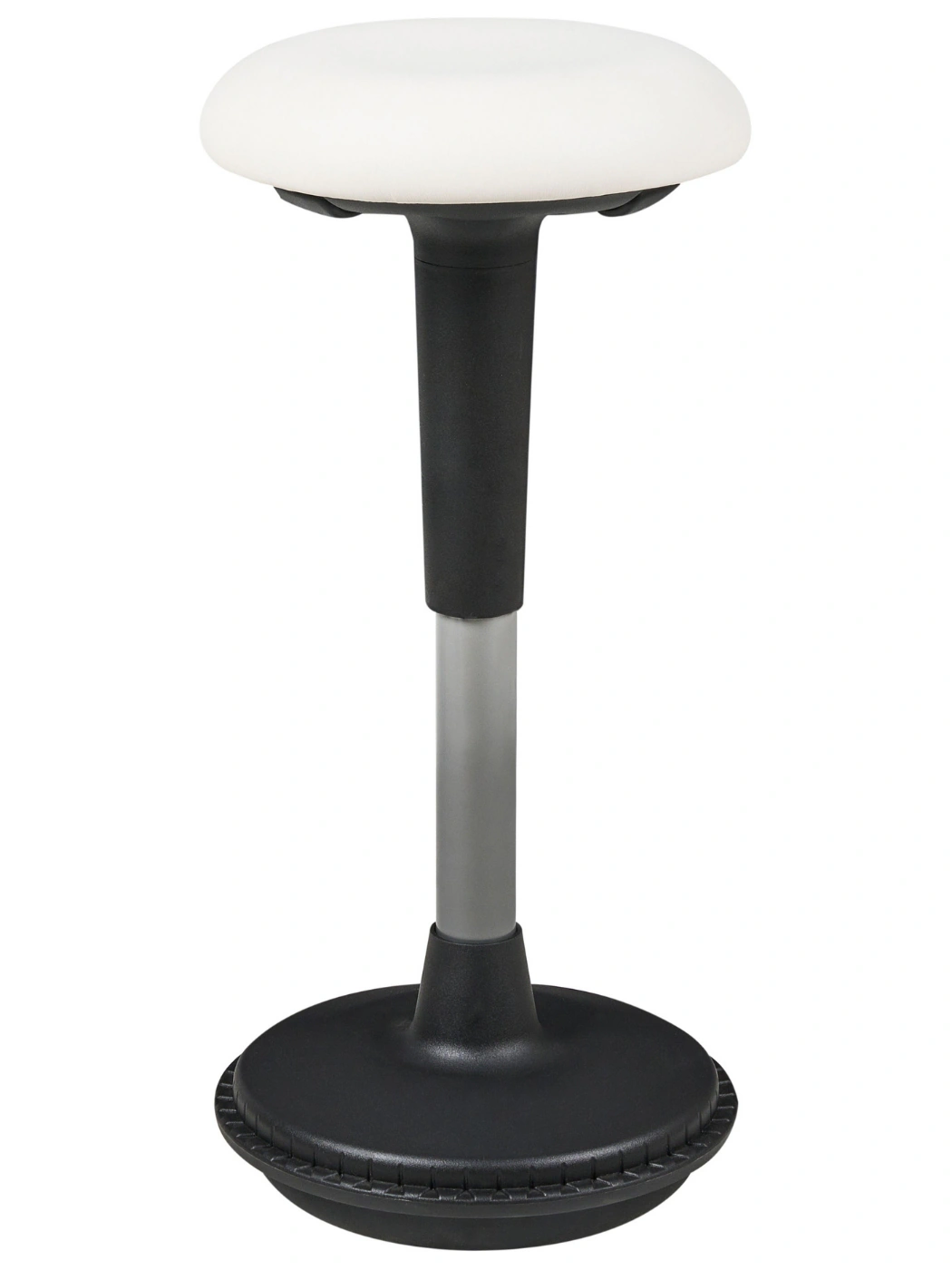
Under-seat lever
Tucked beneath the seat, this lever raises or lowers the stool without needing to stand up, which is useful when swapping between a desk and a kitchen counter.
Gas lift
A sealed gas cylinder makes height adjustment smooth and holds the seat firmly once you let go of the lever, the same mechanism used in most office chairs.
Rounded base
Instead of four flat feet, the base curves gently underneath, which is what allows the whole stool to tilt and rock rather than stay rigid like a normal chair.
Anti-tip safety ring
A reinforced ring around the base limits how far the stool can lean before it rights itself again, so the tilt stays playful rather than risky.
Full 360° swivel
The seat turns freely on top of the base, so you can reach across a desk or counter without shifting the stool itself.
What can you realistically expect from a wobble stool?
A wobble stool will not replace exercise or correct posture on its own, so it is best seen as a way to vary how you sit rather than a fix for anything. Here is what it can reasonably offer:
- Encourages movement and active sitting during desk work, rather than one fixed position for hours
- Gives you a seat that moves with you, so you shift position more often than on a fixed seat
- Asks for small, constant adjustments to stay balanced, so the seat feels more active than a fixed one
- Adds some variety to long stretches of sitting, though it does not replace regular breaks and standing up
- Stays compact and light, so it's easy to move between rooms or tuck under a desk when not needed
- Feels playful and tactile, which some people find keeps them more alert through a long task
A wobble stool is not a medical device
It will not treat an existing back condition, and its constantly tilting base is the wrong choice for anyone with a balance impairment or inner-ear condition. Treat it as an active alternative for part of your day, not a replacement for professional ergonomic or medical advice.
What to check before buying
Once you know how a wobble stool works and where it fits in your day, run through this list before buying one.
- Seat height range against your desk, counter or kitchen island height, including the lowest setting if children will also use it
- Seat diameter against your own build, so you're not perched on the edge of the seat
- Maximum load rating against your own weight, not just the headline figure on the box
- Anti-tip safety ring and rounded base free of damage before first use
- Floor type: a weighted base grips best on hard flooring, while thick carpet can limit how far it tilts
- Under-seat lever positioned so you can reach it while seated, without needing to stand up
- Clear space in every direction roughly equal to the stool's own width, so the base can tilt freely
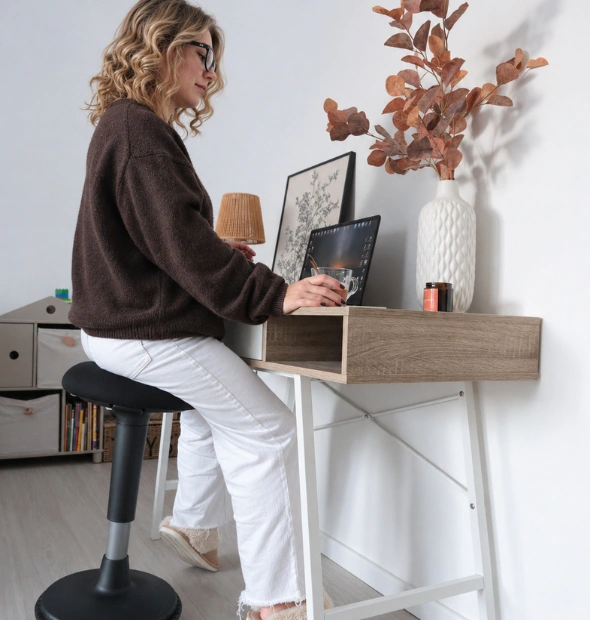
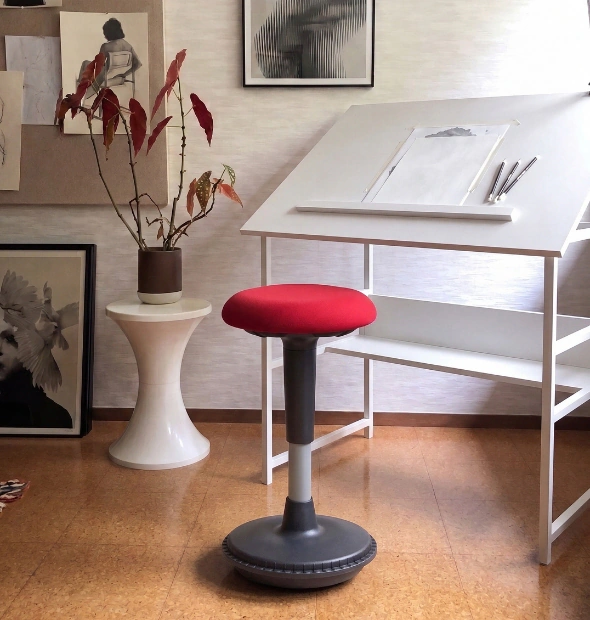
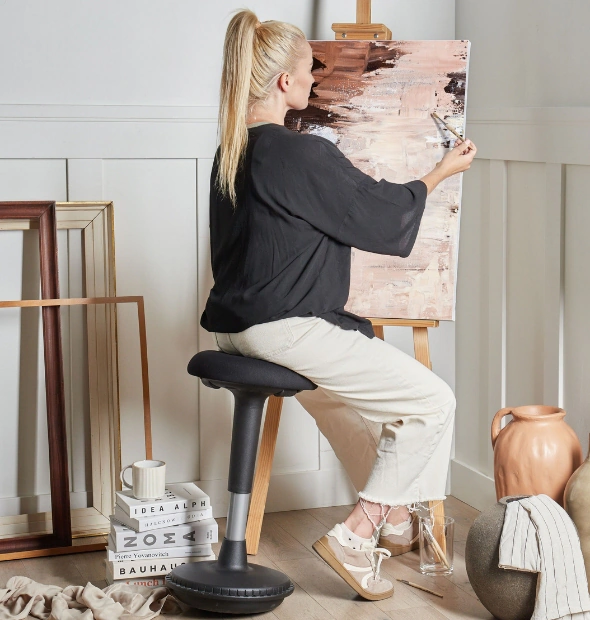
Shop now: products in the pictures
Frequently asked questions
Can you sit on a wobble stool all day?
It is best not to rely on one as your only seat. A wobble stool has no backrest and its seat is always moving, so it works best as an active alternative for part of the day, alongside a supportive chair for long, uninterrupted desk work. If you are new to one, start with short sessions and switch back to a supportive chair whenever you feel tired or uncomfortable.
How is a wobble stool different from an ergonomic stool or a gym ball?
A wobble stool has a rounded, weighted base that tilts a few centimetres in any direction, and its seat height adjusts with a lever. A gym ball moves more freely and can roll away from you, and its height is set by its size rather than adjusted. An ergonomic stool, such as a perching stool, usually has a steadier base that allows less tilt, so it asks less of your balance. None of the three is a substitute for a supportive chair during long, uninterrupted desk work.
What desk or counter height does a wobble stool suit?
As a rule of thumb, leave about 25–30 cm between the top of the seat and the surface you are working at. With a seat height range of 45–60 cm, a wobble stool suits a standard desk of around 72–75 cm, and a standard kitchen worktop of around 90 cm only near the top of its height range. A taller breakfast bar or high counter usually needs a taller bar stool instead, so measure your surface and compare it with the stool's maximum seat height before buying.
Can children use a wobble stool for homework or study?
Yes, once a child can rest both feet near the floor at the stool's lowest height setting, which usually suits most school-age children rather than toddlers. It's worth supervising the first few sessions so they get used to the tilt before using it unattended for longer stretches.
Will the base mark or damage a hardwood floor?
A weighted, rounded base spreads its contact point as it rocks, so it is no more likely to mark a hard floor than a normal chair leg. Adding a floor protector mat is still a sensible precaution under any seating that moves, especially on softer wood finishes.
How long does it take to get used to sitting on one?
Many people feel comfortable within a few short sessions, since the base only tilts a few centimetres rather than demanding constant active balancing the way a gym ball does. Starting with shorter stretches and lengthening them as you get used to the movement is a sensible way in.
Is a wobble stool suitable if you have balance problems or an inner-ear condition?
No, a stool designed to tilt and rock works against rather than with any existing balance impairment. A static, fully supportive chair is the safer choice for anyone with a balance or inner-ear condition, and it's worth asking a healthcare professional if you're unsure.
