How to Arrange Small Spaces
Written and maintained by the Beliani team · Last checked: · About Beliani
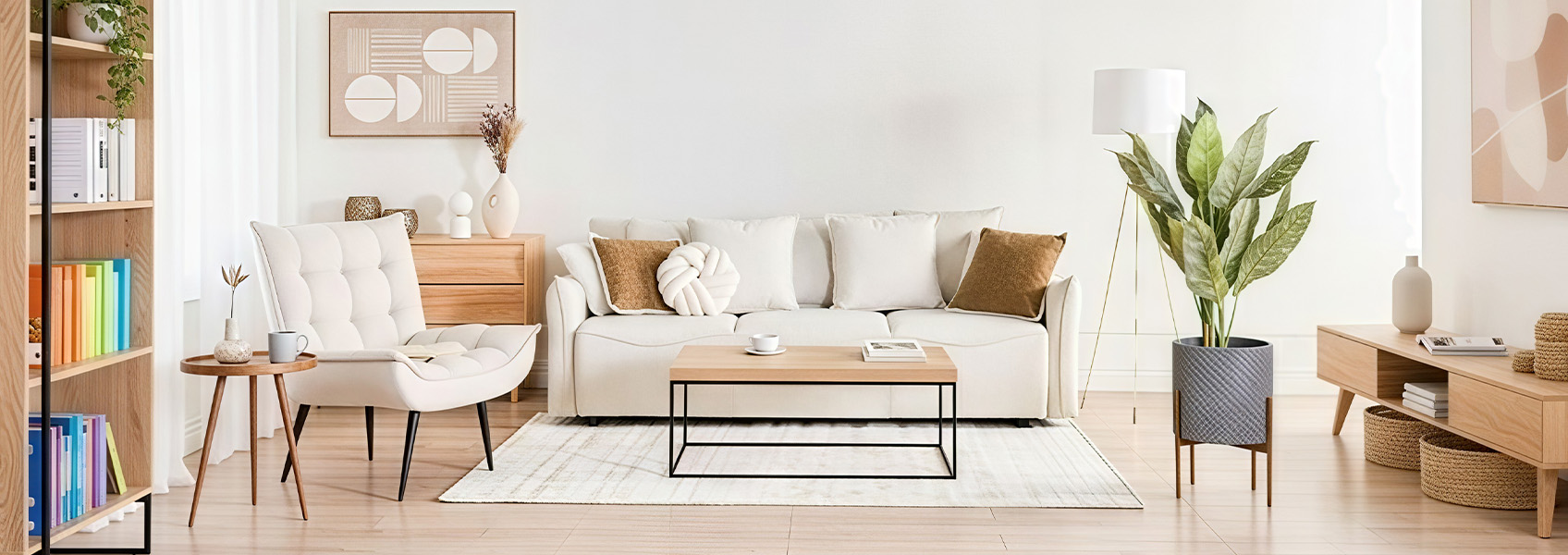
Do you feel like you don’t use the whole potential of your flat? Do not look further than our guide on how to arrange small living spaces into comfortable and functional homes. Furnishing and decorating tiny spaces can be quite a challenge, mainly because it is easy to overdo it and choose the wrong colour, which will result in the optical reduction of the room. Here you will find some tips and advice on how to skilfully and creatively use every piece of your interior to make it stylish, elegant and optically larger than it actually is.
In short
How do I arrange a small flat?
Declutter first, then plan the distances before you buy anything. Keep the main walkway at 80 to 90 cm and secondary routes at 60 to 70 cm, allow 40 to 45 cm between the sofa and the coffee table, and 90 cm in front of wardrobes and drawers. Push the largest pieces against the walls, choose multifunctional furniture such as a sofa bed or a storage coffee table, and pick models raised on 15 to 20 cm legs so the floor stays visible. Keep the walls and ceiling in one light shade and hang one large mirror opposite or beside a window.
- How much floor you actually need to walk, sit down and open doors
- Whether a piece can do two jobs, such as seating plus a sleeping place
- How much storage can move off the floor and onto the walls
- Where the daylight enters, which decides where the mirror goes
- How many small objects are on display, since clutter shrinks a room faster than furniture does
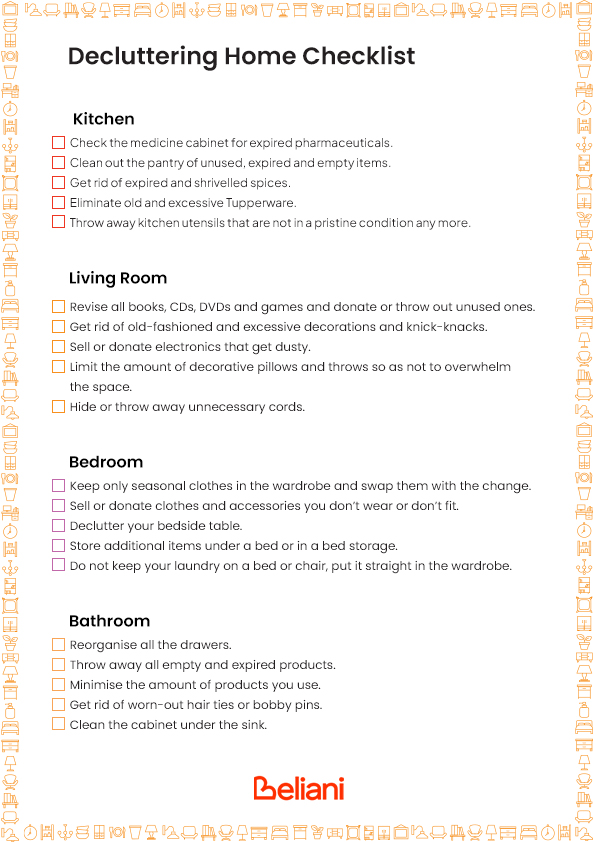
Declutter your room
The first step in arranging a small flat is to declutter and have circulation space for people to easily move around in between the furniture. Follow the principle: "Less is more". If there is something completely unnecessary to the overall decor or non-functional - get rid of it.
Don't keep something just because you might need it someday. When planning your cosy home, remember to create a sense of spaciousness. This includes ensuring smooth navigation, keeping essential areas clutter-free, and maintaining a comfortable gap between your furniture pieces.
These are the distances worth checking before anything is ordered:
- Main walkway: 80 to 90 cm, so two people can pass each other
- Secondary walkway along a bed or behind a chair: 60 to 70 cm
- Sofa to coffee table: 40 to 45 cm, enough legroom without stretching
- In front of a wardrobe or chest of drawers: 90 cm, so doors and drawers open fully
Not sure where to start? We've got you covered! Download our decluttering home checklist.
How to plan the layout of a small room
Planning on paper takes half an hour and saves returning furniture that technically fits but leaves nowhere to walk.
- Measure each wall and note the doors, radiators, sockets and the direction the windows face. These are the points you cannot move, and they decide where the largest piece can go.
- Place the largest piece first, against the longest uninterrupted wall. Everything else is arranged around it.
- Mark the walkways on the floor with masking tape: 80 to 90 cm for the main route, 60 to 70 cm for the secondary ones. If the tape runs under the furniture, the piece is too big.
- Check that wardrobe doors, drawers and room doors all open fully, allowing 90 cm of clear floor in front of storage.
- Move whatever is left over upwards, onto shelving that runs close to the ceiling.
Measure the doorway, not just the room
A three-seater that fits the wall perfectly is no use if it cannot get through the flat door or round the turn in the stairwell. Measure the narrowest point on the delivery route, including the diagonal of the doorway, and compare it with the packed dimensions rather than the assembled ones. In small flats this is the single most common reason a piece goes back.
Embrace multifunctional and folding furniture
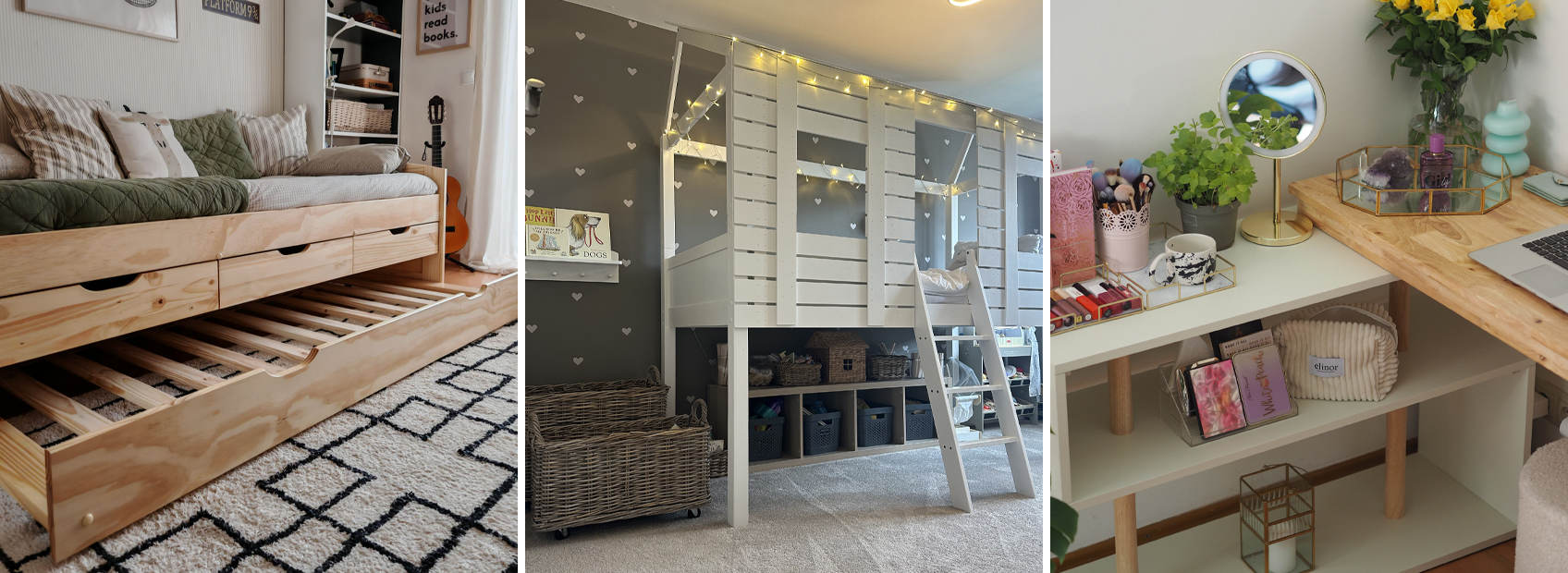
One of the key secrets to maximizing space in small flats is to invest in multifunctional furniture. Think about a sofa with a sleeping function or a day bed for your living room. It can add an elegant touch to your interior and an additional surface to sleep at the same time.
Worth mentioning are also coffee tables with built-in storage, where you can easily store all your things - it also declutters the interior. These pieces save space and serve dual purposes, making your flat more versatile.
Sofa bed
A living room by day, a guest room at night
Choose a seat depth of no more than about 90 cm and check the folded-out length against your walkway before buying. A model with a bedding box removes the need for a separate cupboard for pillows and duvets.
Storage table
Surface on top, storage underneath
A coffee table or upholstered ottoman with a lift-up lid swallows blankets, cables and remotes. It is the fastest way to keep a living room that doubles as a workspace looking tidy.
Extendable table
Two every day, six when guests come
A round or extendable dining table keeps its small footprint most of the week. Pair it with stackable chairs or a bench that slides underneath, so nothing stands in the walkway when it is not in use.
Folding desk
A home office that disappears
A wall-mounted or drop-leaf desk gives you a full working surface during the day and folds flat afterwards. Add shelving directly above it so the desk itself stays clear.
Shop now: sofa beds and coffee tables
Placement of furniture
The visual size of your flat may be impacted by the way you arrange all your furniture. Larger pieces should be placed against the walls to create a sense of spaciousness in the centre. Moreover, slim furniture with high legs helps to avoid the feeling of overcrowding. Choose modular pieces for quick rearrangement whenever you and your home need it.
When floor space is limited, think vertically. Install wall shelves to display decorative items or store essentials. Consider tall bookshelves or cabinets that draw the eye upward, creating an illusion of height. Vertical space can be a game-changer in small flats, providing storage without compromising on style.
Three details make more difference than the floor plan itself:
- Furniture on legs. Around 15 to 20 cm of visible floor under a sofa or sideboard makes the room read as larger.
- Curtains mounted high. Fix the rod 10 to 15 cm below the ceiling and let the fabric reach the floor, so the window and the wall both look taller.
- One rug, generously sized. A rug that is too small chops the floor into pieces. At least the front legs of the sofa should stand on it.
Light colours
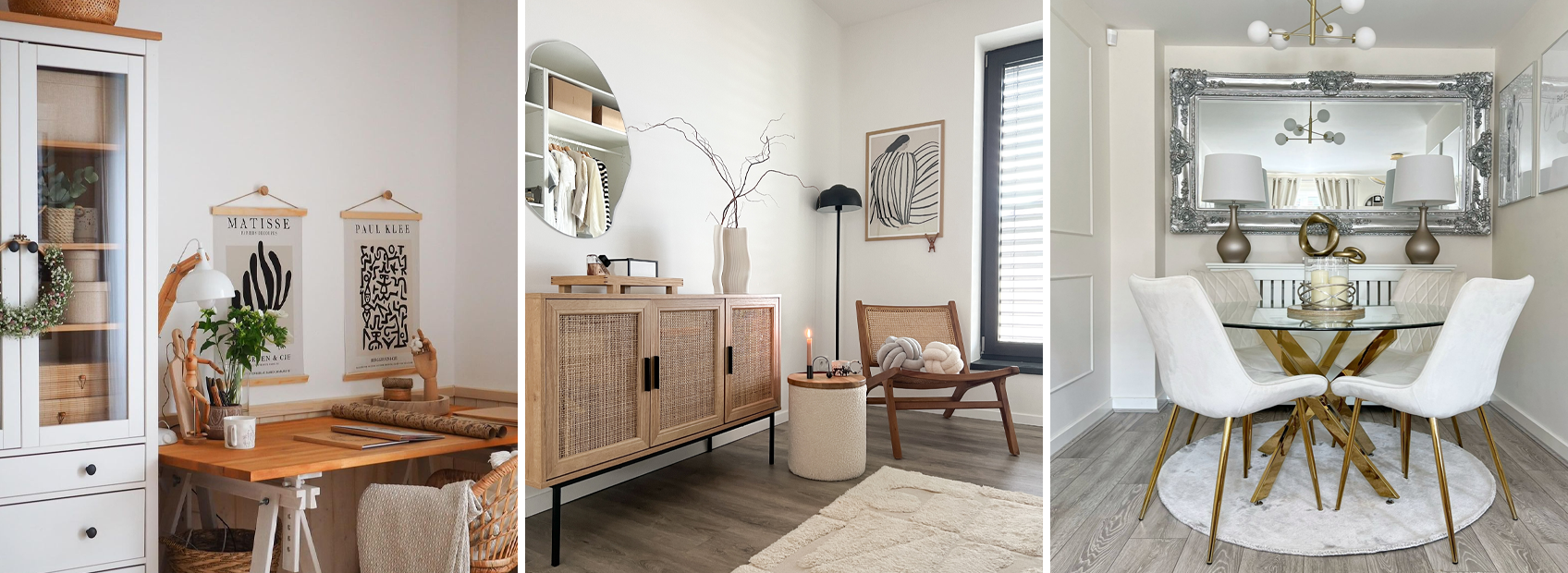
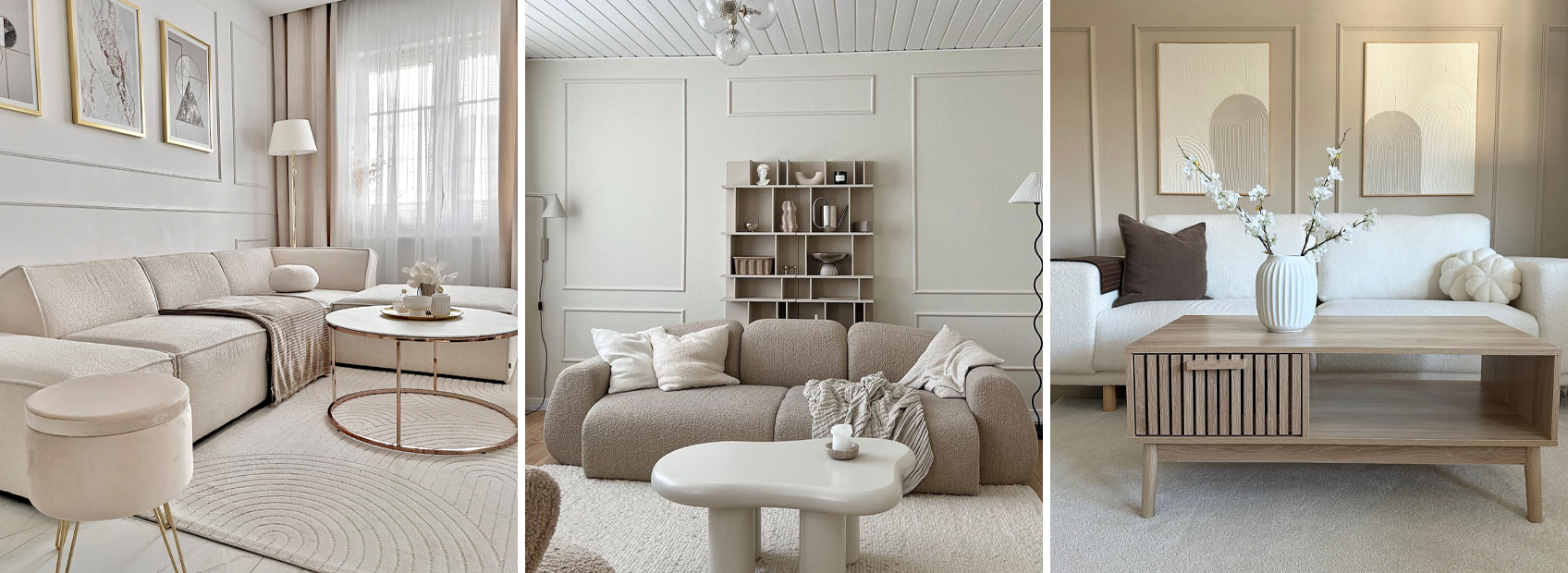
Colours, such as whites, creams, and pastels, are known for their ability to reflect natural light and create an illusion of openness. When applied to walls, furniture, and decor, these hues can make your small space feel brighter and bigger. The reflective nature of light colours helps bounce natural and artificial light around the room, minimising shadows and giving the space a more expansive feel. Light-coloured walls also provide a versatile background to incorporate pops of colour through furnishings and accessories.
While the focus is on light colours, adding subtle accents can add depth and interest to your small flat. Introduce shades slightly darker than the main colour scheme through throw pillows, artwork, or small decor items. This creates a layering effect that adds dimension without overwhelming the space.
A simple way to keep it balanced is the 60-30-10 rule: 60% light base colour on the walls and the large furniture, 30% a secondary tone in textiles and rugs, and 10% accents in cushions, art and accessories. Painting the walls and the ceiling in the same light shade blurs the corners and stops the room feeling boxed in.
Mirror magic
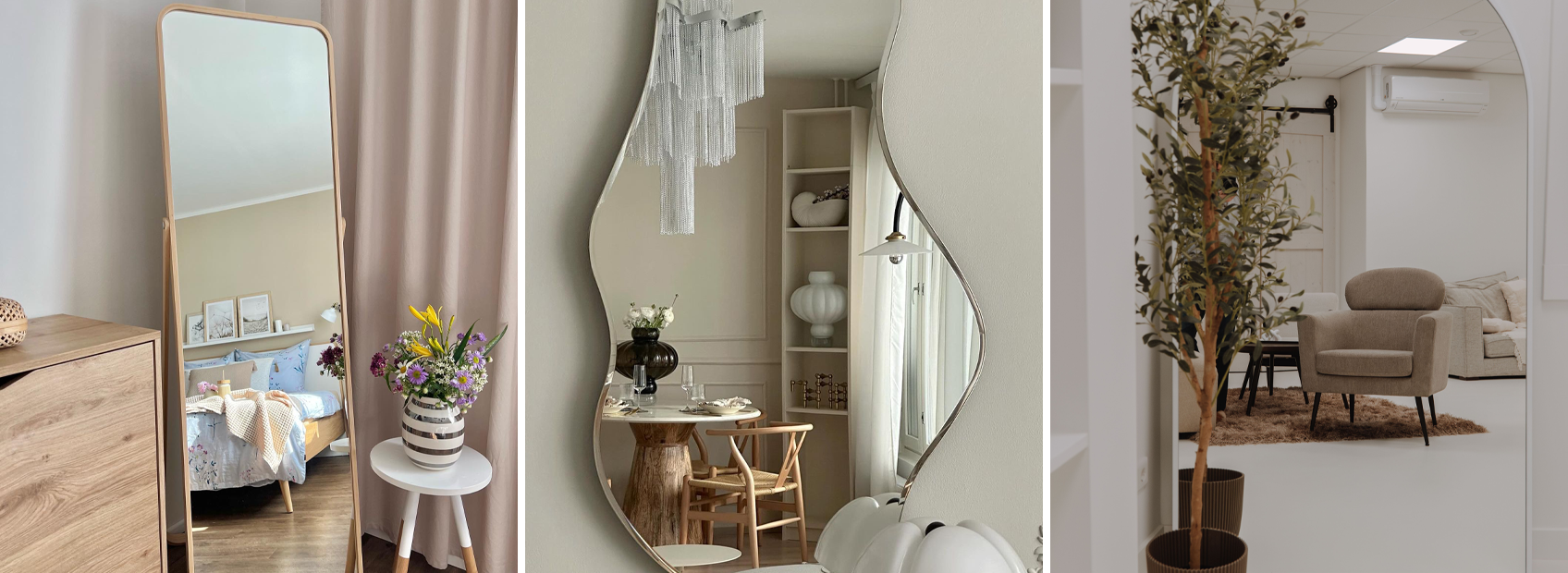
One of the most important features of mirrors is their ability to create the illusion of additional space. Placing mirrors on walls opposite windows reflects natural light, instantly brightening the room and making it feel larger. Mirrors can do more than just visually expand a space, they can also enhance the dynamics of a room. Proper placement of mirrors can highlight architectural features, draw attention to specific focal points, and create interesting reflections of artworks or decorative elements.
Consider installing a large mirror on a focal wall to amplify the sense of space. Additionally, mirrored furniture pieces, such as dressers or coffee tables, can add a touch of glamour while contributing to the overall illusion of expansiveness.
Where to hang it: opposite or at a right angle to a window, to bounce daylight further into the room; behind a dining table or a sofa, to double the perceived depth; or full height at the end of a narrow hallway, to stretch it visually. Avoid pointing a mirror at a cluttered corner, because it only doubles the clutter.
Shop now: wall mirrors
Which piece to choose, room by room
The same principles look slightly different in each room. This is the short version.
| Room | The biggest space thief | What to choose instead | Keep clear |
|---|---|---|---|
| Living room | A deep, bulky corner sofa | A two-seater or sofa bed on legs, up to about 90 cm deep, plus a storage ottoman | 40 to 45 cm to the coffee table |
| Bedroom | Bedside tables plus a chest of drawers | A bed with a storage box, wall-mounted lamps and one floating shelf | 60 to 70 cm along the bed |
| Dining area | A fixed table with six chairs | A round or extendable table with stackable chairs or a bench | 75 to 90 cm behind each chair |
| Hallway | A full-depth wardrobe | A slim shoe cabinet of about 30 cm, wall hooks and a tall mirror | 80 cm of passage width |
| Home office | A large corner desk | A wall-mounted or folding desk with shelving directly above | 90 cm behind the chair |
| Bathroom | Bottles and towels on every surface | A mirror cabinet, an over-the-toilet shelf and a slim laundry basket | 70 cm in front of the basin |
Read more: turning your bathroom into a home spa
Final tips for tiny spaces
Arranging a small flat is an art that involves creativity, smart choices, and a dash of style. By incorporating multifunctional furniture, strategic placement, and clever design elements, you can transform your compact living space into a chic and comfortable haven. Don't forget to play with colours, utilize vertical space, and keep it clutter-free. With these tips and tricks, your small flat can become a showcase of both efficiency and elegance.
Frequently asked questions
How do I make a small room look bigger?
Keep the walls and ceiling in one light shade, choose furniture raised on 15 to 20 cm legs, place the larger pieces against the walls and leave the centre of the room free. Add one large mirror opposite a window and move storage upwards onto the walls instead of spreading it across the floor.
What colours are best for a small flat?
Whites, creams, light greys, beiges and pastels reflect the most light and open up the room. Darker tones are not ruled out, but keep them to one accent wall or to accessories so the space gains depth without closing in.
Which sofa suits a small living room?
A two-seater or a compact sofa bed no deeper than about 90 cm, with slim armrests and visible legs. If you need a sleeping place for guests, choose a model with a sleeping function and a bedding box rather than adding a separate guest bed.
How much space should I leave between furniture?
Allow 80 to 90 cm for the main walkway, 60 to 70 cm for secondary routes, 40 to 45 cm between the sofa and the coffee table, and 90 cm in front of wardrobes and drawers so they open fully.
Can I use large furniture or a big rug in a small room?
Yes. A few larger pieces read as calmer than many small ones. One generously sized rug and one tall bookcase make a room feel bigger, while several mini tables and small pictures make it look busy and cramped.
Where should I hang a mirror in a small room?
On the wall opposite or at a right angle to a window, so it reflects daylight back into the room. A full-height mirror at the end of a narrow hallway visually lengthens it. Avoid pointing a mirror at a cluttered corner, because it only doubles the clutter.