

What Size Rug Do I Need? A Room-by-Room Rug Size Guide
Written and maintained by the Beliani Content Team · Last checked: · About Beliani
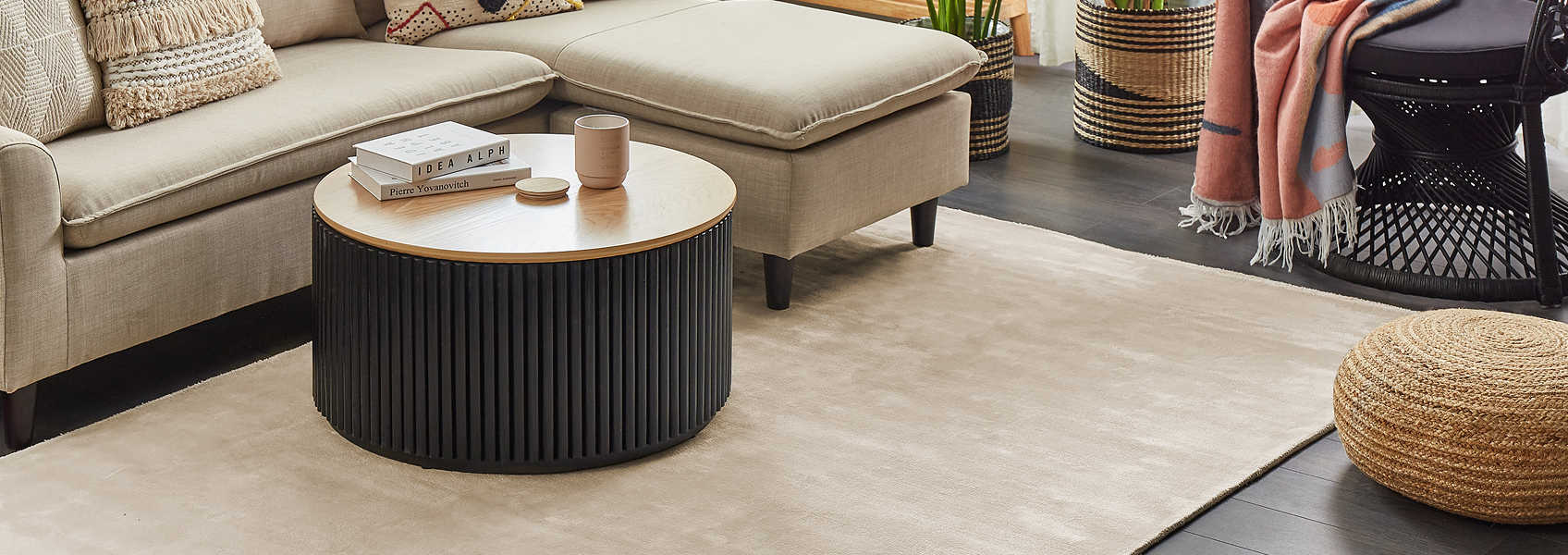
The short answer: choose a rug large enough to sit under the furniture it belongs to, not just next to it. In a living room that means at least the front legs of every seat on the rug; in a dining room the table and all pulled-out chairs; in a bedroom a rug that reaches past the sides of the bed; in a hallway a runner centred down the corridor. Always leave a visible border of bare floor between the rug and the walls.
Four rules that apply in every room:
- Size to the furniture, not to the room. The rug defines a zone, so it should relate to the sofa, table or bed standing on it.
- Match the shape. Rectangular rug with a rectangular table or sofa, round rug with a round table, runner for a corridor.
- Leave a floor border. Bare floor on all sides is what stops a rug looking like fitted carpet.
- When in doubt, go larger. A slightly generous rug looks intentional; an undersized one always looks like an accident.
Rug size is the detail most people get wrong. An oversized rug swallows even large furniture, while an undersized one floats in the middle of the floor and makes the whole room feel unfinished. This guide walks through the correct rug placement for each room in the house, the mistakes to avoid, and how to test a size before you buy.
If you are still deciding on colour, material or pile height, our complete rug guide covers those choices in detail.
Read more: ultimate rug guide
On this page
What size rug do I need for a living room?
A living room rug should be large enough that at least the front legs of every seat rest on it, and it should extend beyond the sofa on both sides so the seating area reads as one group. If the rug is smaller than the sofa, or if only the coffee table sits on it, the rug will look undersized and the room will feel disjointed.
The living room is where the family gathers, so this is the room where a correctly sized rug does the most work: it ties the seating together, softens the acoustics and gives everyone somewhere warm to put their feet. There are two arrangements that reliably work.
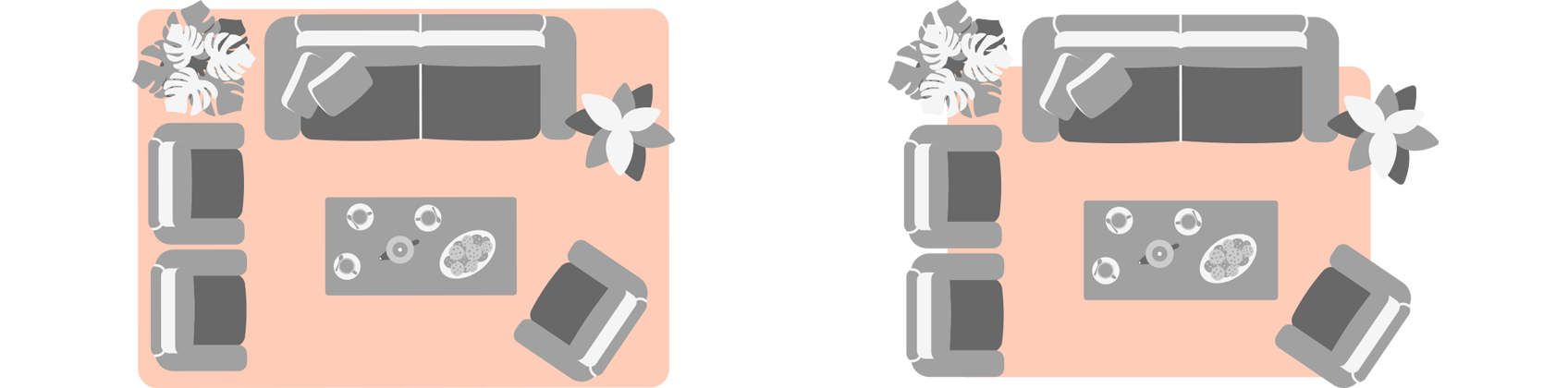
Should all furniture legs sit on the rug?
Placing all furniture legs on the rug is the most comfortable and most stable arrangement, because every seat rests on the same surface and side tables and plant pots stay level. It is the best choice for larger living rooms, since it requires a rug big enough to sit under the whole seating group with floor still showing around the edges.
Can only the front legs of the furniture sit on the rug?
Yes. Resting only the front legs of the sofa and armchairs on the rug is a well-proportioned option for medium-sized living rooms. It still anchors the seating group and gives you a soft surface underfoot, while using a smaller rug than the all-legs-on arrangement. Keep side tables, plants and other decoration off the rug so the space around the seating stays uncluttered.
Which living room rug mistakes should you avoid?
Avoid a rug that only sits under the coffee table, because it disappears between the seats, hides its own pattern and gives you no warmth underfoot where you actually sit. Also avoid forcing a round rug under a full seating group: it pulls the armchairs too close to the sofa, leaves no leg room and makes the arrangement look unplanned.
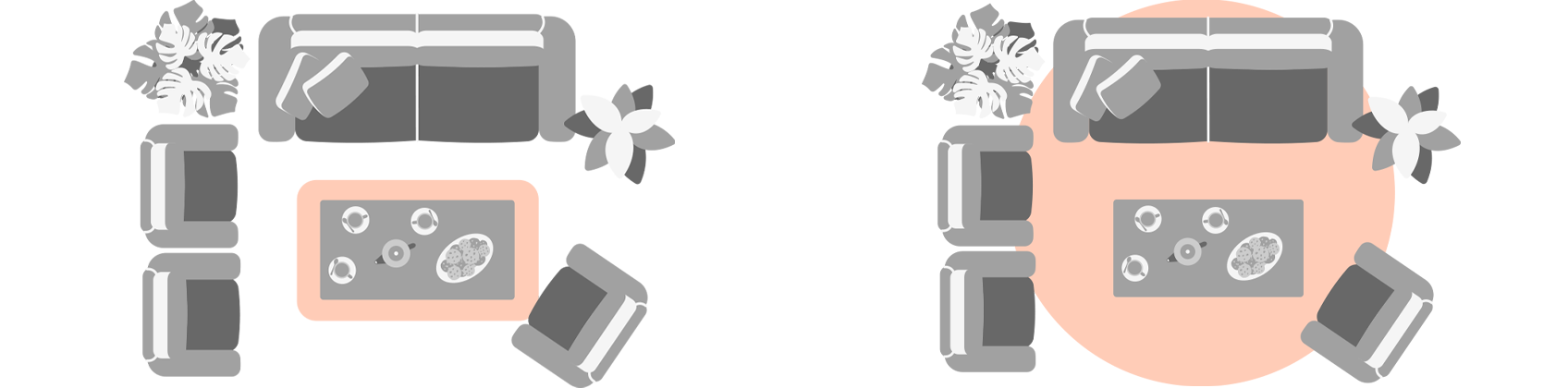
Avoid in the living room
- Only the coffee table on the rug. The table covers the pattern, the rug shrinks the room visually and nobody's feet ever touch it.
- A round rug under a full seating group. Fitting the front legs of several armchairs onto a circle forces them in towards the sofa and removes leg room.
- A rug narrower than the sofa. The sofa looks like it is balanced on the edge instead of resting inside the zone.
What size rug fits under a dining table?
A dining room rug must be big enough for the table and every chair to stay fully on it, including when the chairs are pulled out to sit down. Match the rug shape to the table shape: rectangular rug with a rectangular table, round rug with a round table.
The rules here are the simplest in the house, because there is really only one correct arrangement and the chairs tell you immediately when the rug is too small.
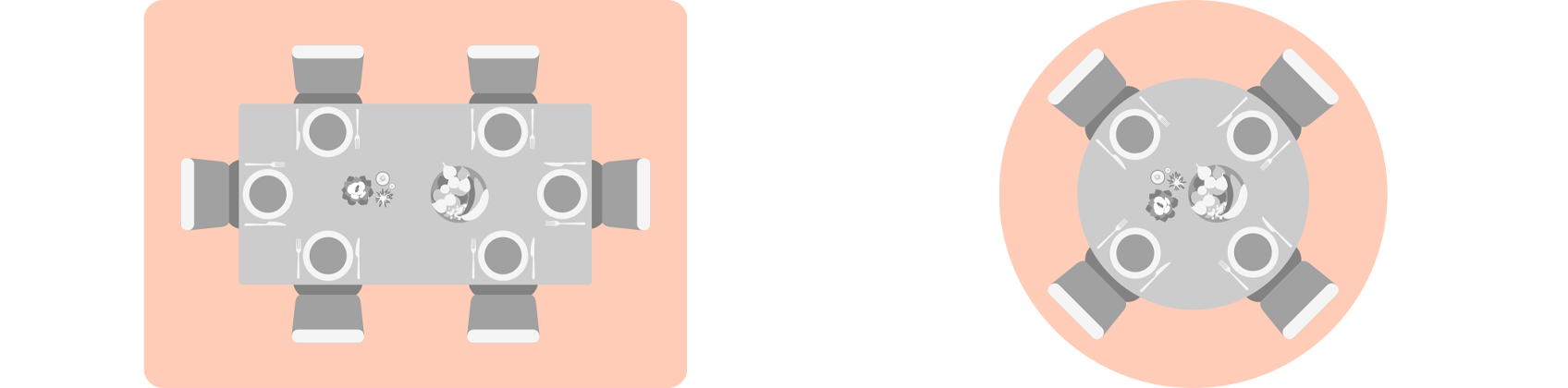
Should dining chairs stay on the rug when pulled out?
Yes. Chairs should remain fully on the rug when pulled back from the table, otherwise the rear legs catch on the edge every time someone sits down or stands up. Sizing the rug so all chairs stay on it also keeps the setting looking organised and gives a warm surface underfoot at every seat.
What size round rug works under a round dining table?
A round rug should be noticeably larger than a round table so the chairs stay on it, but not so large that it overwhelms the room. A round rug makes a round table look more substantial, which works especially well in smaller dining areas with fewer chairs.
Which dining room rug mistakes should you avoid?
Avoid an oversized rug that runs almost wall to wall, as it swallows the dining set and makes the room feel smaller. Equally, avoid mixing shapes, such as a round rug under a rectangular table, because the corners of the setting fall off the rug and the mismatch is visually distracting.
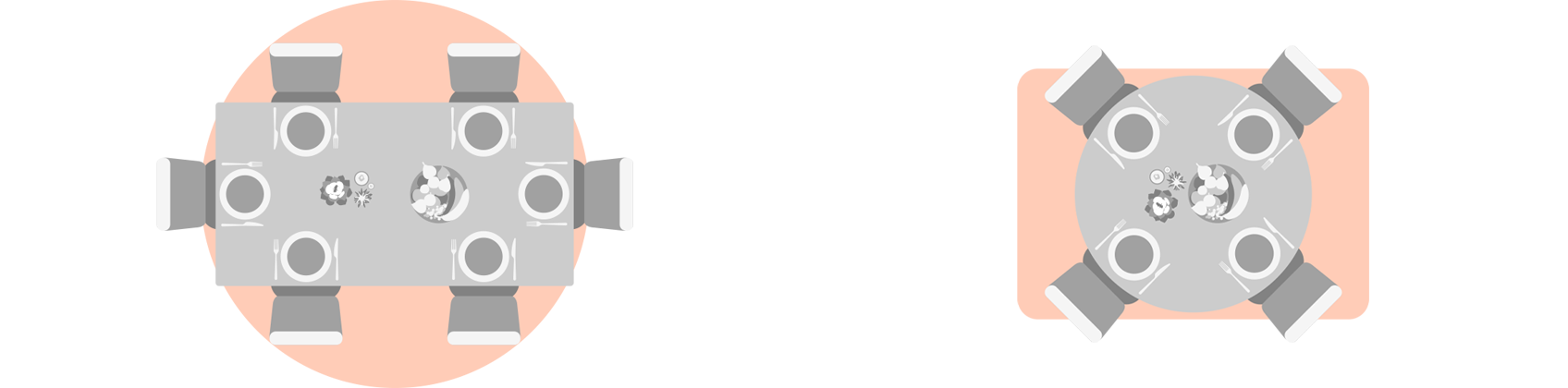
Avoid in the dining room
- A rug that reaches almost to the walls. You keep the comfort but lose the proportions, and the dining set stops being the focal point.
- Mixing shapes. A round rug under a rectangular table, or the reverse, always leaves chairs half on and half off.
- Sizing to the table only. Measure with the chairs pulled out, not pushed in.
What size rug should go under a bed?
A bedroom rug should extend far enough past the sides of the bed that your feet land on it when you get up. The three arrangements that work are the whole bed on a large rug, a medium rug sitting under the lower two-thirds of the bed, or two smaller rugs placed one on each side.
Bedrooms vary more in shape and layout than any other room, so it helps to pick the arrangement that fits the space you actually have rather than the one you have seen most often.
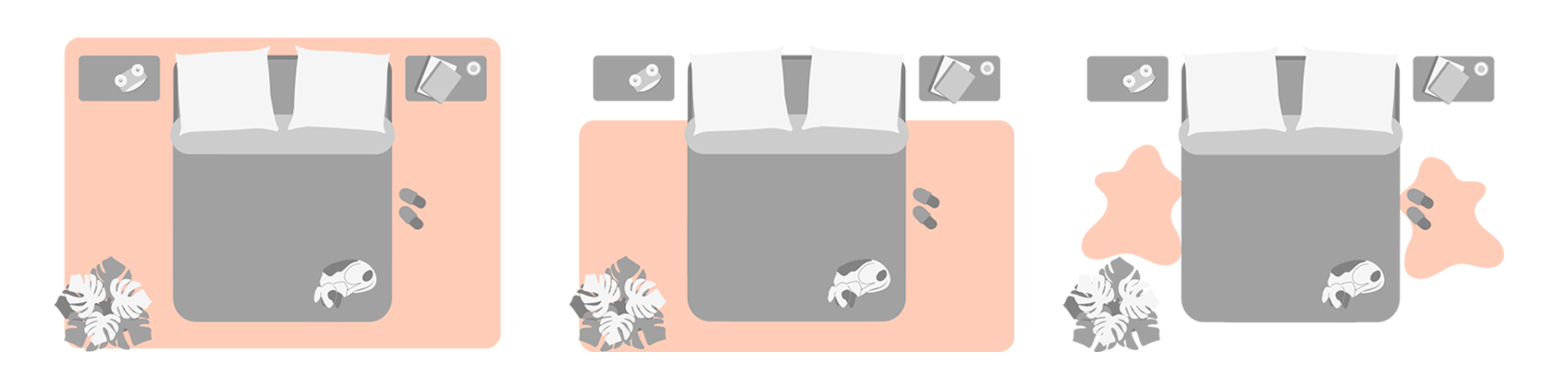
Should the whole bed sit on the rug?
In a larger bedroom, yes. Placing the whole bed and the nightstands on one rug gives the most cohesive, balanced result and means the floor is soft on every side of the bed. It needs a generous rug, so it only works when there is still bare floor visible around the edges.
Where should a rug go if it only reaches the foot of the bed?
Slide the rug under the lower two-thirds of the bed so it starts below the nightstands and extends past the foot of the bed. Because no other furniture stands on it, this rug can be slightly narrower than the bed-plus-nightstands footprint, and leaving the headboard end off the rug does not affect stability.
Do two small rugs beside the bed work?
Yes. Two smaller rugs running along each side of the bed are a refined, space-efficient solution, and they work particularly well in single bedrooms and narrow rooms. Keep the wardrobes, nightstands and other furniture off the rugs so both sit clear on the floor.
Which bedroom rug mistakes should you avoid?
Avoid a narrow rug tucked across the very end of the bed, as it visually disappears, gives you nothing soft to step onto in the morning and makes both the bed and the room look smaller. Also avoid a small round rug centred under the bed, which vanishes beneath the frame and leaves the layout looking cramped.
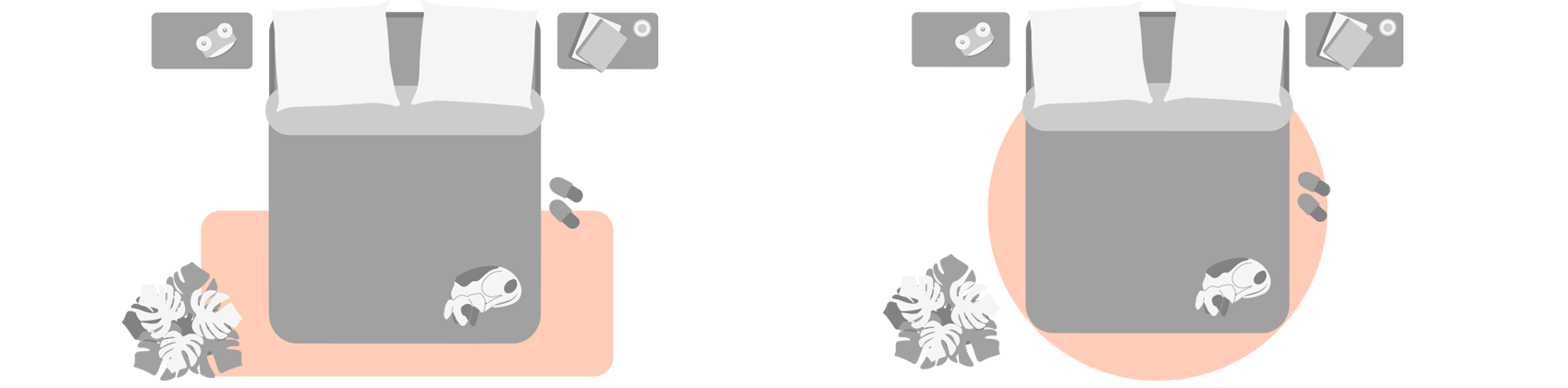
Avoid in the bedroom
- A narrow rug across the foot of the bed. It reads as a strip of fabric rather than a rug and does nothing for your first step of the day.
- A small round rug under the centre of the bed. The frame hides almost all of it.
- A rug that stops short of the bedside. If your feet land on bare floor when you get up, the rug is in the wrong place.
What size rug works in a hallway?
A hallway calls for a runner that follows the length of the corridor with a margin of bare floor on both long sides and at each end. The runner should be narrow enough that no furniture stands on it and long enough that you walk along it rather than stepping over it.
The hallway is the first thing guests see, so a well-proportioned runner does a lot to set the tone of the whole home.
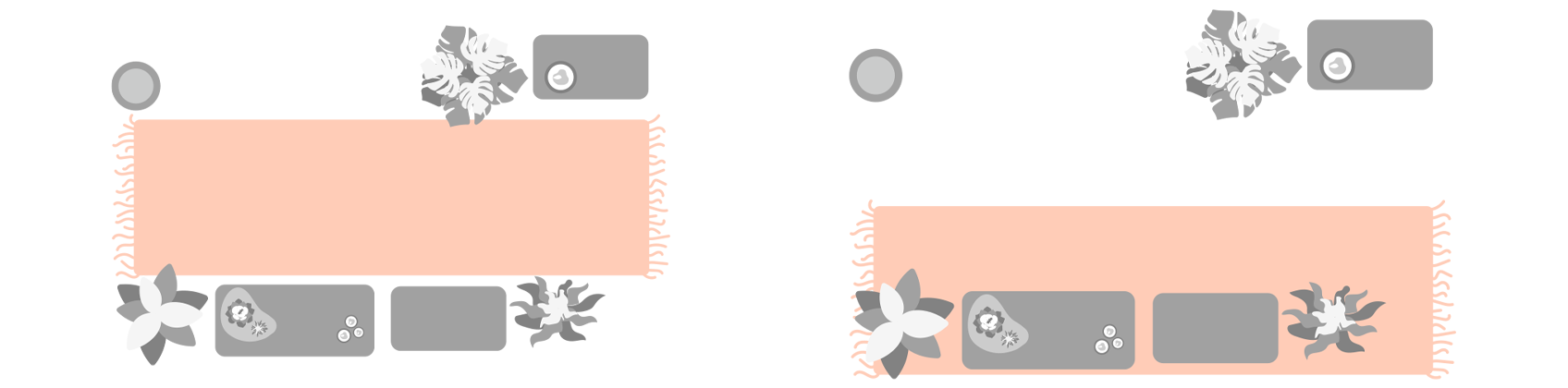
Where should a hallway runner be positioned?
Centre the runner along the corridor with an even gap on both sides. It works equally well starting just inside the front door or further down the hallway. Either position creates a welcoming entrance and gives you a soft surface as soon as you take your shoes off.
Which hallway rug mistakes should you avoid?
Avoid standing a sideboard, console or shoe cabinet on the runner. The furniture covers the pattern, throws the runner off centre and means you no longer feel the rug underfoot along the whole corridor, which defeats the point of having it.
What size outdoor rug do I need?
Size an outdoor rug the same way as an indoor one: it should sit under the whole lounge or dining set, or at least under the front legs of every seat, with the rug shape matching the shape of the furniture. Terraces and gardens suit large rectangular rugs, while balconies usually work best with a small rug sized to a bistro set.
Whether you have a garden, a terrace or a compact balcony, the right outdoor rug turns a hard paved surface into a room-like space.
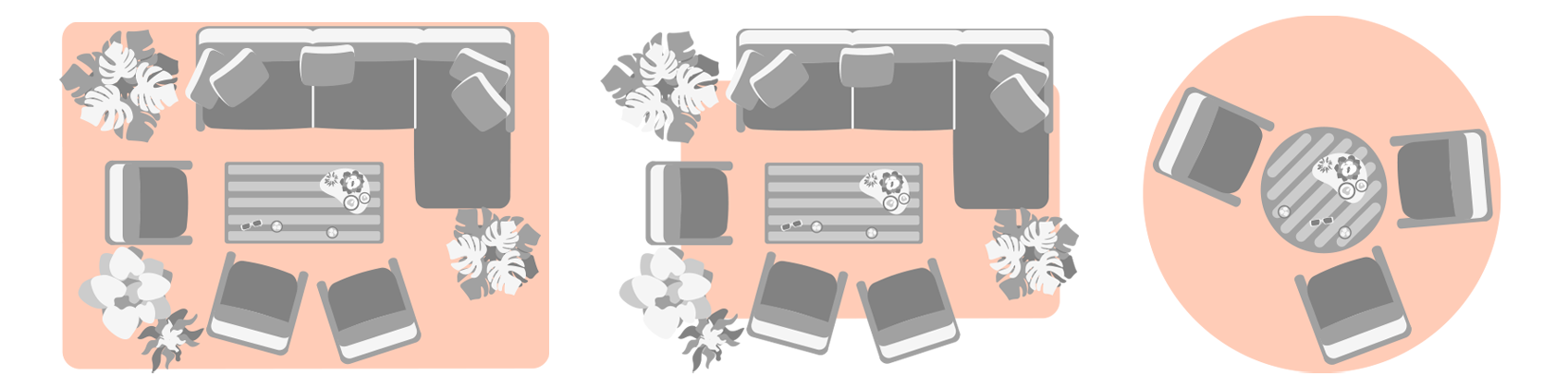
How do you size a rug for a large terrace or garden lounge?
Place the entire lounge set on the rug, exactly as you would in a living room. This keeps the furniture stable on uneven paving, shows off the full pattern and gives a comfortable surface as you move around the seating area.
What rug size suits a small balcony?
On a balcony, size the rug to the bistro set: a round rug under a round table, or a small rectangular rug under a rectangular one, with the whole set on the rug. If there is no space for a full-size rug, use a smaller one under the front legs of the chairs and keep planters and accessories off it.
Which outdoor rug mistakes should you avoid?
Avoid pairing a round rug with a large rectangular lounge set, as the corner pieces never fit and the rug is lost under the furniture. Avoid a rug that only holds the coffee table, which offers almost no comfort and hides the pattern. And avoid a rectangular rug under a round table, where the mismatch in shape looks unbalanced.
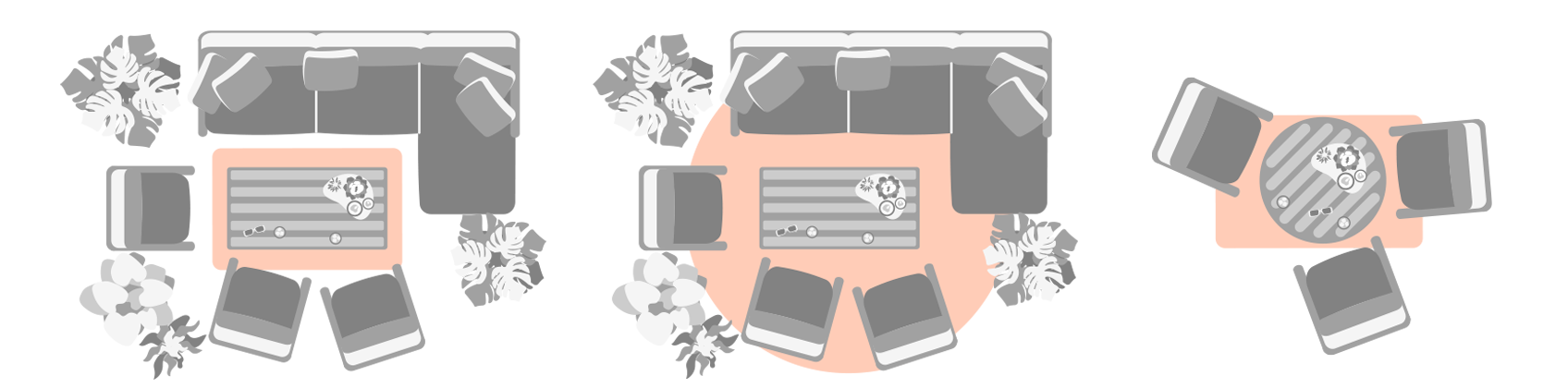
Avoid outdoors
- Round rug, large lounge set. The corner sofa never fits the circle, and the rug ends up buried.
- Rug sized to the coffee table. Almost no comfort, almost no visible pattern.
- Rectangular rug, round table. Follow the dining room rule outdoors too and match the shapes.
How do I check a rug size before buying?
Mark out the rug dimensions on the floor with painter's tape or newspaper before you order. Then sit down, pull the dining chairs out and walk the route you use daily to check the outline still works. This shows you in minutes whether the size is right, how much floor stays visible and whether doors still open freely.
A four-step size check
- Measure the furniture group, not the room: sofa plus armchairs, table plus pulled-out chairs, or bed plus nightstands.
- Tape the outline of the rug size you are considering onto the floor.
- Live with it briefly. Sit down, stand up, open the doors, walk through. The outline should never cut across where your feet land.
- Check the border. If there is no bare floor left around the tape, size down; if the furniture spills well past it, size up.
Rug size and placement: room-by-room summary
| Room | Placement that works | What to avoid |
|---|---|---|
| Living room | All furniture legs on the rug in a large room; front legs only in a medium room. Rug wider than the sofa. | Rug under the coffee table only; round rug under a large seating group; rug narrower than the sofa. |
| Dining room | Table and all chairs fully on the rug, including when pulled out. Rug shape matches table shape. | Rug reaching almost to the walls; round rug with a rectangular table; sizing with the chairs pushed in. |
| Bedroom | Whole bed and nightstands on a large rug, a medium rug under the lower two-thirds of the bed, or two rugs at the sides. | Narrow rug across the foot of the bed; small round rug hidden under the frame. |
| Hallway | Runner centred along the corridor with an even floor margin on both sides. | Sideboards or shoe cabinets standing on the runner; a runner too short to walk along. |
| Outdoor | Whole lounge set on the rug on a terrace; front legs on the rug in smaller spaces; bistro set fully on a round rug on a balcony. | Round rug with a large corner set; rug sized only to the coffee table; rectangular rug under a round table. |
Rug size FAQs
Is it better to buy a rug that is too big or too small?
If you have to choose, err on the larger side. A slightly too-large rug still anchors the furniture and makes the room feel more generous, while a too-small rug looks like an afterthought, floats in the middle of the floor and visually shrinks the space. The exception is a rug so large it runs almost wall to wall, which reads as fitted carpet.
Should a rug be wider than the sofa?
Yes. A living room rug should extend beyond both ends of the sofa so the sofa looks supported rather than perched on the edge. A rug narrower than the sofa immediately reads as undersized, no matter how the rest of the furniture is arranged.
What size rug works in a small living room?
In a small living room, choose a rug that at least holds the front legs of the sofa and armchairs and still leaves a visible border of floor around it. One correctly sized rug is far better than two small ones, which cut the floor into pieces and make a compact room feel tighter.
How much floor should be visible around a rug?
Leave an even border of bare floor between the edge of the rug and the walls on all sides. That visible frame is what makes a rug look deliberately chosen rather than wall-to-wall carpet, and it keeps the proportions of the room readable. A rug should never be pushed up against the skirting board, as the edge buckles over time and the room looks narrower.
What rug shape should I choose for my room?
Match the rug shape to the furniture it sits under, not to the room. Rectangular rugs suit sofas, beds and rectangular dining tables; round rugs suit round tables, single armchairs and small bistro sets; runners suit hallways, galley kitchens and the sides of a bed.
Does rug size make a room look bigger or smaller?
Yes. A generously sized rug that gathers the furniture together makes a room look larger and more considered, because the eye reads one continuous zone. Several small rugs, or one rug too small for the furniture, break the floor into fragments and make the same room feel smaller and busier.
Can one rug work in an open-plan living and dining space?
It is usually better to use two rugs, one for each zone, than to stretch a single rug across both. Give the seating area its own rug and the dining table a separate one sized so the chairs stay on it. Keeping the two rugs similar in tone or material ties the open-plan space together without merging the zones.
Can I layer rugs if my rug is too small?
Yes. Layering a smaller patterned or textured rug over a larger, plainer one is a practical way to reach the right footprint without replacing the rug you already own. Keep the bottom rug big enough to satisfy the placement rule for the room and let the top rug sit at an angle or slightly off-centre for a deliberate look.
With the placement rules for every room covered, the only step left is choosing a rug whose size, shape and design suit your space.
