
 Free Delivery & Return
 365-Day Returns
 10 Million Happy Customers
 500,000 Products in Stock


Chenille


Chenille fabric
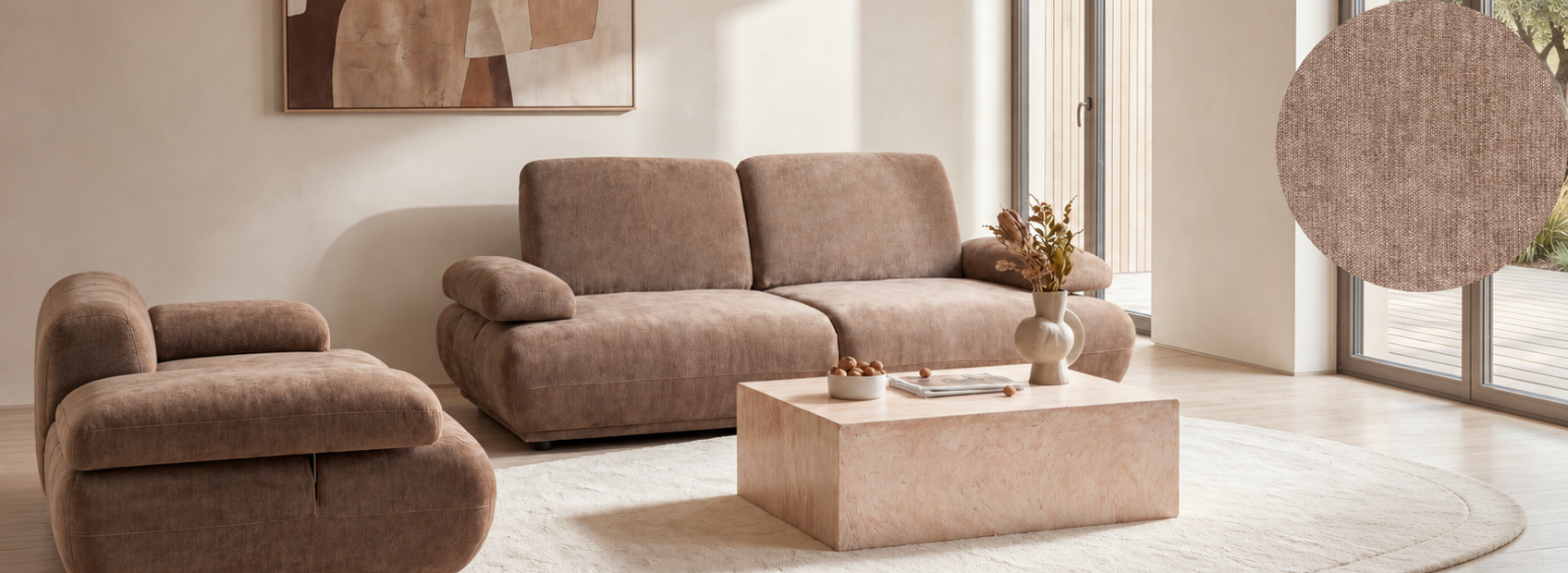
Chenille gives sofas, armchairs and upholstered beds a soft, textured surface. The weave affects how the fabric looks in your room and how it holds up to everyday use. This guide explains what to look for in product photos and specifications, and how to judge whether chenille suits your household.
Is chenille a good upholstery fabric?
Chenille is a good choice for soft, textured upholstery. For a sofa you use every day, check whether the fabric is suitable for frequent use and how the manufacturer advises cleaning spills. If pets spend time on the furniture, look for a tight weave, as claws can catch more easily on loose yarns.
What does chenille look and feel like?
Chenille yarn has short fibres that form a soft pile. A fine weave adds subtle texture to a sofa or headboard, while a coarser weave gives a simple shape more visible texture. Some finishes look lighter or darker as the pile changes direction, so check the product photos taken from several angles and think about the light in the room where the furniture will sit.
How well does chenille hold up to everyday use?
Durability varies with the weave and yarn. On frequently used seats and armrests, the pile can flatten over time. If the product lists an abrasion rating, use it to compare resistance to rubbing between fabrics tested by the same method. Check the surface separately for loose yarns that could catch on claws or clothing fastenings.
How do you care for chenille upholstery?
If the care instructions allow vacuuming, use an upholstery attachment and low suction to lift dust and crumbs. For a fresh spill, blot gently with a clean, dry cloth and follow the manufacturer's instructions before applying water or a cleaning product. Rubbing can disturb the pile and spread the spill.
What to check before buying
Use the product photos and specification to check how the upholstery will work in your home.
- Think about the light in your room: daylight and evening lamps can make the same shade look warmer or cooler.
- Look at the close-up photos from different angles to see how visibly the shade changes with the pile direction.
- Check the weave in the close-up photos for loose yarns if pets climb onto the furniture.
- Look for an abrasion rating or a statement about suitability for frequent use.
- Read the care instructions to see how the manufacturer recommends dealing with spills.
Frequently asked questions
What is chenille fabric made from?
Chenille can be made from polyester, cotton or a blend of fibres. The term describes the yarn construction, so check the product specification for the fibre composition.
What is the difference between chenille and corduroy?
Chenille gets its soft texture from the fuzzy yarn used in the fabric. Corduroy has raised ribs that run in parallel and give the surface a more defined pattern.
Can chenille upholstery fade in sunlight?
Yes, prolonged exposure to direct sunlight can fade chenille upholstery. If the furniture sits beside a sunny window, use blinds or curtains to limit direct exposure.
Can you machine wash removable chenille covers?
Machine wash chenille covers only if the care label allows it. A zip makes a cover removable, while the label specifies whether it can be washed and which settings to use.